Is it safe to walk on Abraham Lake?
On a guided tour you only walk where the guide judges the ice safe that day, and that is most of the answer. The real hazards, from wind on bare ice to open water near the inflows, mostly catch people who wander off alone. This guide goes through each one and what to do about it.
The guide makes the call
That call can shift from one week to the next on every tour listed here. Follow the guide's line across the lake and stop where they stop.
Guides know the spots often named for bubbles, such as Preacher's Point and Windy Point, and they see how the ice changes through the winter. A visitor on a first trip cannot read the ice the same way.
When conditions look wrong, the stop can be shortened or moved. Top Choice Tours from ~$121 says plainly that its route adapts to weather and road conditions, and the other listings visit Abraham weather permitting.
Cracks and booming are usually normal
Lake ice moves as the temperature swings and as the reservoir level changes beneath it. Long white cracks and deep booming or pinging sounds are usually part of that movement and do not mean the ice is about to give way.
Fresh cracks can show a little water seeping up along the line. Step around wet cracks rather than over them, and let the guide decide whether a route still holds.
The noise startles almost everyone the first time. Stay calm and keep walking with the group, and ask the guide if a particular sound worries you. They hear it on every trip.
Pressure ridges and open water
Pressure ridges are a different matter. Where two sheets of ice push together they buckle into a raised seam, and the ice along it can be thin or hide water underneath.
Open water often appears near the inflows, where creeks and rivers enter the lake, and along stretches of shoreline. Moving water keeps the ice thin there even in deep cold, so never walk toward a dark patch to look closer.
Early and late in the winter the ice is thinner everywhere, which is why the tours visit only in the cold months. We do not quote thickness figures, because ice that looks solid can vary a great deal within a few steps.
Stay off the lake entirely during a thaw or a warm chinook spell. Wet or slushy ice underfoot is a sign to turn back toward the shore at once.
Leave every bubble sealed, and keep lighters and matches in your pocket. The trapped gas is methane, which burns, and a hole in the ice weakens it for whoever walks there next.
Wind is the hazard people forget
The same wind that sweeps snow off the lake and exposes the bubbles can knock you off your feet. On polished ice there is nothing to dig a heel into, and a strong gust can slide a person several metres.
That is why cleats or crampons matter more than any jacket on this trip. Three of the four tours hand them out, but the Rockies Journey listing is silent on them, so check or pack your own. Our clothing guide lists who supplies what.
Take short steps with soft knees. Keep your gloves on and your phone in a pocket, so your hands are free to break a fall.
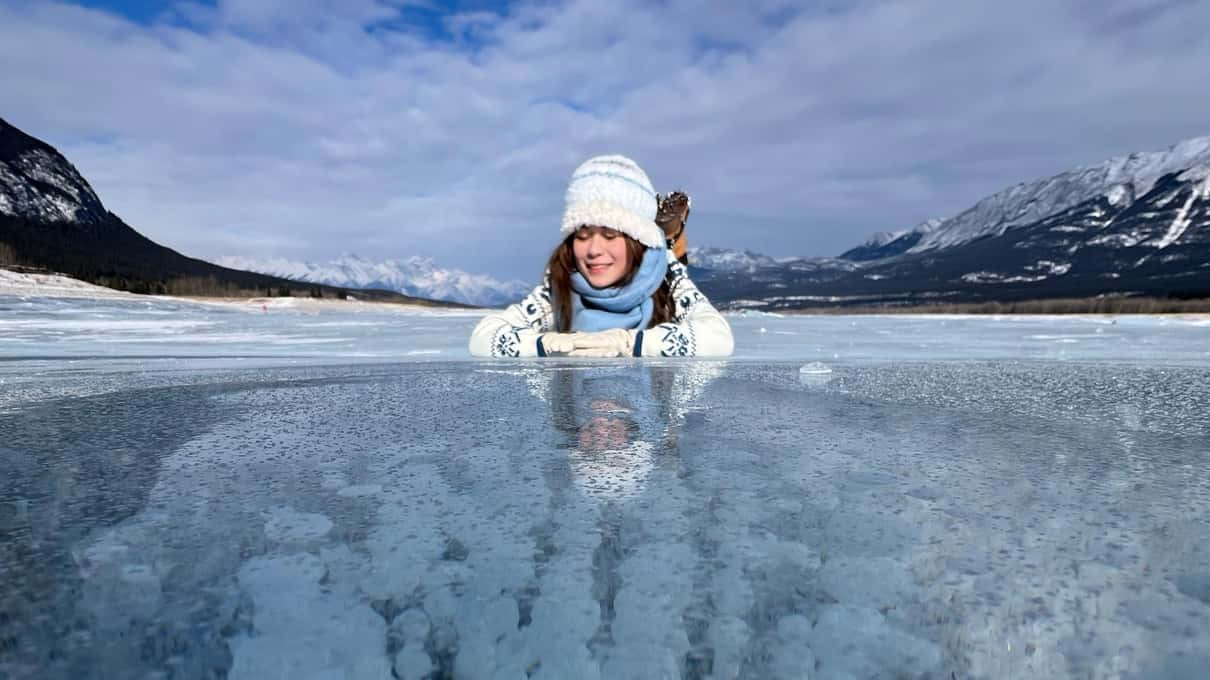
Cleats in the fare and a route that bends to the weather
Top Choice Tours includes ice cleats in winter, caps the group at 13 and adjusts the day around road and weather conditions. It is the longest day of the four at 12–13 hours from Calgary, and it is sold on GetYourGuide only.
If you go without a tour
Self-drivers carry the whole risk themselves. Walk with at least one other person, and tell someone at home or at your hotel where you are going and when you expect to be back.
Cell coverage around the lake and along Highway 11 is patchy at best, with long stretches of none. Do not count on calling for help from the ice; a satellite messenger is a safer bet.
Carry cleats and a spare warm layer even for a short walk from the car. A twisted ankle on bare ice turns a ten-minute stroll into a long, cold wait.
Daylight is short and services on the road back are few, so leave the lake with time to spare. Our guide to driving there yourself covers winter tires and fuel, and the season guide covers when the ice usually settles.
Age and mobility
The walking itself is short and flat, but bare ice is hard going for anyone unsteady on their feet. Radventures suggests a minimum age of 12 and turns away children aged 5 and under. It also lists every activity as optional.
Rockies Journey says its tour is not wheelchair accessible. If anyone in your group has limited mobility, ask the operator before booking how far the walk from the van to the ice runs.
A short checklist for the lake
- Cleats or crampons on before you step onto the ice
- Stay with the guide and keep off pressure ridges
- Keep well away from open water and dark patches
- Never puncture a bubble or bring a flame near one
- Turn back in a thaw, or when the ice looks wet
- Keep your phone warm and tell someone your plan
Bubbles are never guaranteed, even on safe ice, since snow can cover them and wind can change the surface overnight. Read how the bubbles form and our photo tips to make the most of whatever the lake shows you.